Shopify Theme Customization vs. Custom Development: Which One Actually Fits Your Store?
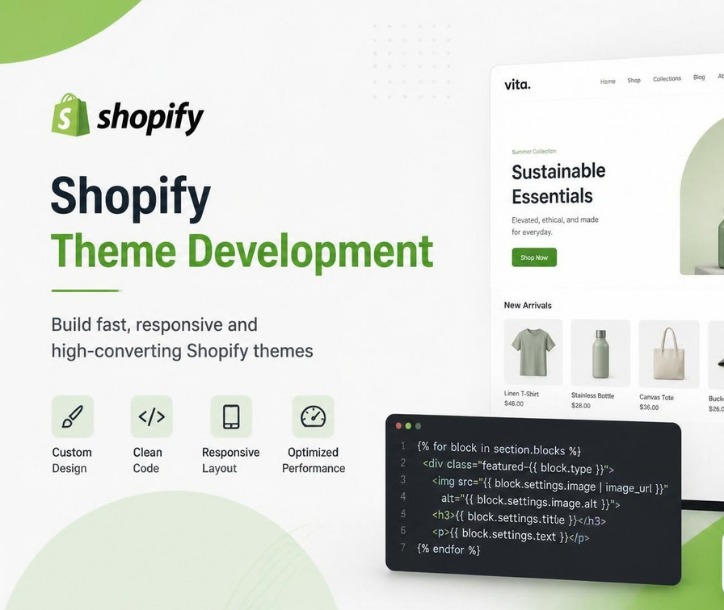
Quick answer: Theme customization means modifying an existing theme (like Shopify’s Dawn) and typically costs a fraction of a full build — ideal for stores that need to launch quickly on a limited budget. Custom development means building a theme entirely from scratch, usually starting around $3,000+, and makes sense once your store has significant traffic (1,000+ monthly visitors is a common benchmark) or your design itself is a competitive advantage.
Nearly every growing Shopify brand eventually hits the same fork in the road: keep customizing the theme you already have, or invest in building something entirely custom. It looks like a technical question, but it isn’t — it’s a business decision with real consequences for cost, launch timeline, performance, and long-term flexibility. Here’s how to actually think it through.
First, What’s the Real Difference?
Theme customization starts with an existing foundation — a free theme like Dawn, or a premium one like Debutify, Booster, or Wokiee from vendors like Out of the Sandbox or Krown Themes. A developer modifies sections, styles, and Liquid templates within that foundation using Shopify’s Theme Editor, plus custom code where needed.
Custom development has no foundation. A developer or agency builds your storefront from the ground up — every section, every metafield, every line of front-end code written specifically for your store, with no template constraints and no locked layouts.
These aren’t the same service with different price tags. They’re genuinely different approaches with different tradeoffs.
The Case for Theme Customization
- Dramatically lower cost. Properly customizing a premium theme can deliver a similar brand effect for 95–99% less than a full custom build.
- Faster launch. Days or a few weeks, not months — which matters more than most merchants expect. A store that launches in three weeks and starts collecting real customer data has a head start no amount of extra polish can make up for later.
- Built-in reliability. Popular themes are used by thousands of stores, tested thoroughly for responsiveness, speed, and SEO, and often come bundled with features like mega menus, quick view, and upsell popups — reducing how many third-party apps you need.
- Ongoing support. Reputable theme vendors provide regular updates and bug fixes, something a fully custom build has to handle entirely on its own.
The Case for Custom Development
- No ceiling. With a custom build, your limitation is Shopify’s API, not a theme template. Every design decision — spacing system, typography scale, product card behavior — reflects your brand exclusively, not a layout thousands of other stores are also using.
- Fewer third-party dependencies. Pre-built themes often require a stack of apps to cover functionality gaps. Each app is additional script weight, an additional integration point, and additional risk — stores running 15–20 apps aren’t unusual, and that’s 15–20 external parties with write access to your live storefront. Proper app integration planning helps limit this even within a custom build.
- Built to extend, not work around. Custom development creates a foundation designed for your specific roadmap, rather than one your team spends hours working within the limits of.
- Real differentiation. Customers recognize popular theme layouts, often subconsciously — that familiarity can quietly work against brand differentiation once you’re competing on design.
The Decision, Simplified
Ask two questions:
- Can your budget realistically support building and maintaining a custom theme, not just the initial development cost?
- Does your storefront experience genuinely influence whether someone buys — is design a real competitive lever in your market, not just a nice-to-have?
If the honest answer to both is yes, custom development is likely justified. If either answer is no, a premium theme properly customized will deliver a similar brand effect for a fraction of the cost — and the “customize vs. build from scratch” choice usually isn’t as either/or as it first appears. Many growing stores start with a well-customized theme, then move to custom development later once traffic and revenue justify the investment.
A Rule of Thumb Worth Remembering
Custom development tends to make sense once a store is seeing 1,000+ monthly visitors, or once design has become a genuine differentiator rather than just an aesthetic preference. Below that threshold, the opportunity cost of a longer build timeline — months instead of weeks — usually outweighs the benefits, since that time could instead be spent collecting real customer data and refining what actually converts.
The Bottom Line
There’s no universally correct answer — only the answer that fits where your business actually is right now. Theme customization wins on speed, cost, and built-in reliability. Custom development wins on flexibility, differentiation, and long-term scalability once you’re past the point where a template can keep up with your roadmap. The right move is matching the approach to your stage, not defaulting to whichever sounds more impressive.
Theme customization is significantly cheaper — properly customizing a premium theme can cost 95–99% less than a full custom build, which typically starts around $3,000 and increases with scope.
Custom development tends to make sense once your store sees 1,000+ monthly visitors or once your storefront design is a genuine competitive differentiator in your market. Below that, a well-customized premium theme usually delivers similar brand impact for far less cost and time.
Yes. Many growing Shopify brands launch with a customized theme to get to market quickly, then invest in custom development once traffic and revenue justify the additional cost and timeline.
Trending Articles

10 Shopify Mistakes That Kill Sales
July 10, 2026
Ecommerce Trends to Watch in 2026 (For Shopify Brands)
July 10, 2026
Modern UI/UX Principles: A Shopify UX Audit Case Study
July 10, 2026
Shopify SEO Checklist 2026
September 21, 2026Recommended for you
Modern UI/UX Principles: A Shopify UX Audit Case Study
Category: Web Design | July 10, 2026 Many ecommerce businesses focus heavily…
Read More →
Ecommerce Trends to Watch in 2026 (For Shopify Brands)
Quick answer: The ecommerce trends actually shaping 2026 include agentic commerce (AI…
Read More →
10 Shopify Mistakes That Kill Sales
Quick answer: The most common Shopify mistakes that kill sales are app…
Read More →